Rugby posts on a grass pitch in front of autumn trees in England

Hard yards are madeunderneath.

Rugby is played from September to April, through every wet month the year has, on studs that go deeper than any other sport's. Pitch & Course builds the soil under the pitch so rain goes in, the middle roots back between fixtures, and the ground is not lost to the weather.

One pallet.One pitch, or one hectare.£1,000 plus VAT.

20 bags of 25 kg, spread once a year at 500 kg per hectare with a standard spreader. Delivery quoted at order.

A rugby pitch takes more than any other grass surface

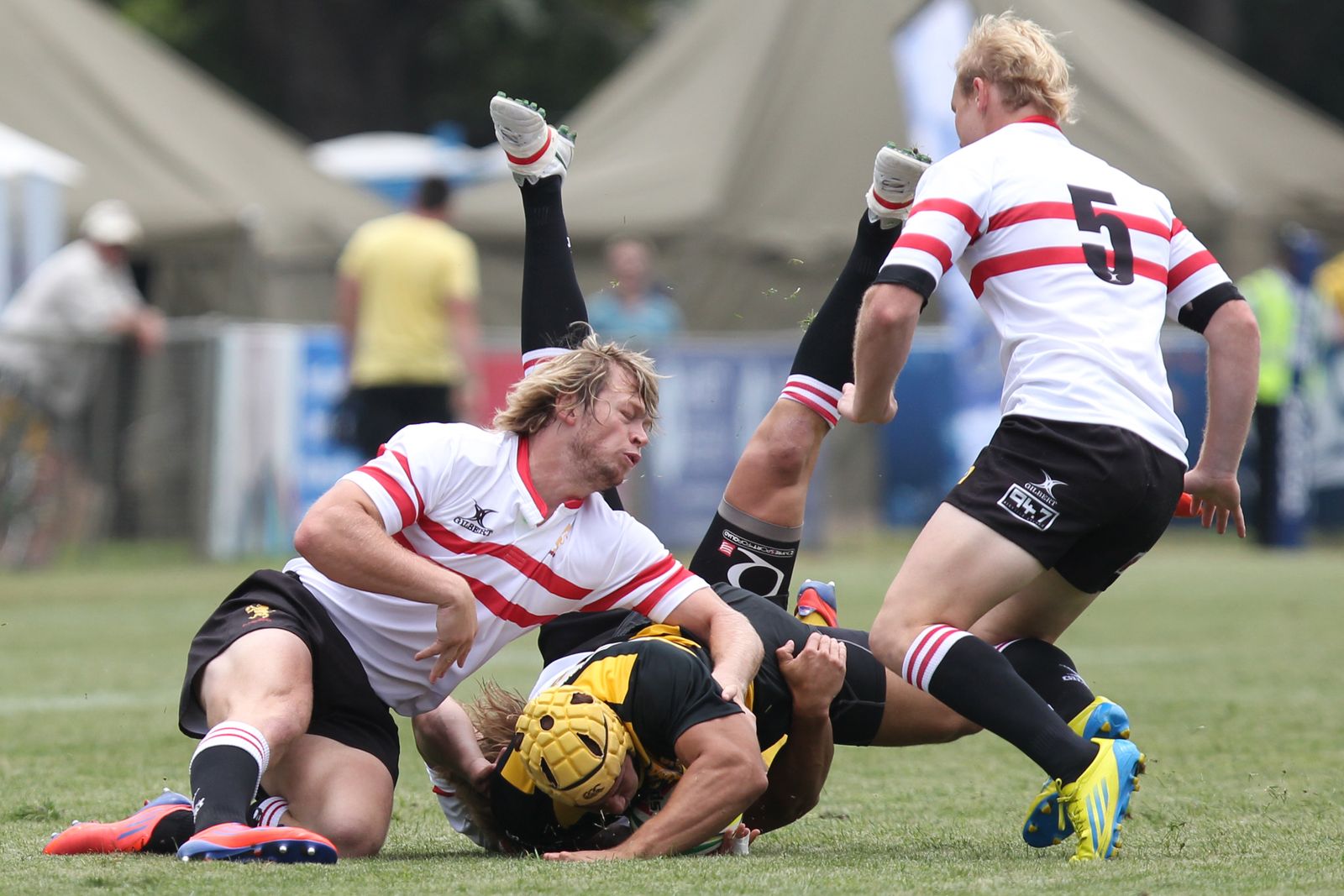
Sixteen forwards driving on the same ten metres, rucks that churn the middle, deep studs, and a fixture list that runs straight through the wettest months. By February the middle third is mud, and the drains can only take the water that reaches them.

The wet months

Compacted topsoil takes water slowly, so it sits. Waterlogged pitches lose fixtures, and a pitch that is saturated every weekend churns faster than it can recover.

Scrum and ruck areas

Shallow roots tear out under a scrum. Deeper, denser roots hold the turf together and knit back between games, so the middle is not bare ground by January.

August pre-season

Soil with little humus dries fast and holds little. Humus holds water where the roots are, so the pitch is green and growing when training starts, not brown and living on the sprinkler.

Where to measure it. PitchPower, the Football Foundation's free inspection app, covers rugby surfaces and a Grounds Management Association adviser writes the report. The RFU runs Rugby Groundsmen Connected and the GMA has Rugby Pitch Advisers. Use the same inspection before and after, and the comparison measures itself.
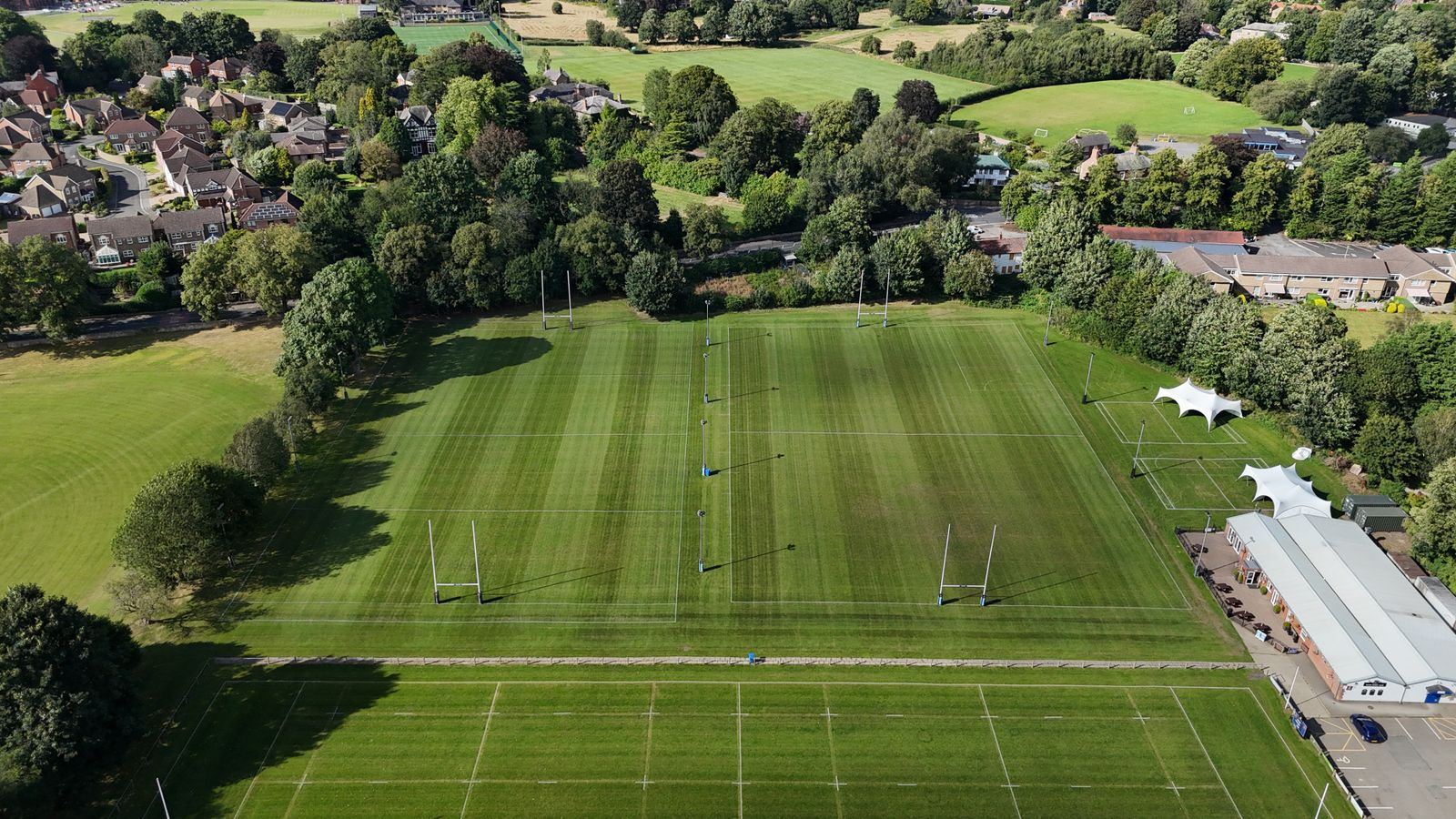
Rugby and football pitches from the air, North Yorkshire.

What the biology changes under a rugby pitch

  • The structure opens. Humus made from thatch, clippings and old root binds on to clay to form crumbs. Water goes in and the excess drains, so the surface is saturated less often and churns less when it is played on wet. On a split trial, 100 mm of water went into the treated half in 235 seconds against about 27 minutes on the other.
  • The roots go deeper. Around the roots, the biology frees up phosphate and potash already in the soil but locked away, and the roots go down to reach it. On heavy clay, three annual applications took rooting from 35 cm to 95 cm. Deeper roots are what hold a scrum area together.
  • The soil holds water where the roots are. Humus holds moisture through a dry spell, so the pitch comes into September with a sward on it.
  • It compounds. The biology establishes and keeps working, so the second season starts from where the first finished. Keep the deep aeration: the biology builds the structure that aeration opens, so the relief lasts longer.
What it is. Not a fertiliser, not a biostimulant and not a plant protection product: it is the living biology of a healthy soil, and it works on the soil. On sand dominated constructions, talk to us first and we will plan it with you.

On the track in Ireland since 2019

Two Irish racecourses have had Bacteriosol under the racing surface and the parade ring since 2019, and both have extended the area every year. Their managers have put on the record what they saw: deeper roots, a sod that recovers faster after racing, and ground that drains.

Fairyhouse Racecourse, Co Meath

Started on the parade ring and a small piece of track that was proving difficult for sod depth and water retention, monitored with the course's track advisor, and extended every year since. By 2023 it covered about a quarter of the racing surface.

We have found that the roots system has increased year on year and has led to improved sod strength, quality and density. The biggest return we have made for our investment is seeing the sod under foot recovering quicker than before after each race meeting, and ultimately leading to a safer racing surface.
Peter Roe, Racecourse Manager
Written testimonial, and on video for Soil Ireland, SOBAC's Irish distributor
Naas Racecourse, Co Kildare

The walk in to the parade ring lay wet and soggy after any overnight rain and had to be cordoned off on race days. Three years after the first application it was filmed the morning after a stormy night with 10 to 15 mm of rain, and the manager said it was “making our job so much easier to bring areas literally back to life”.

After a very, very wet night we have practically dry soil, meaning that the drainage in the area is just fantastic.
The track manager
Naas Racecourse, on video, November 2022

Their words, on the record, from two courses that started small and now treat more ground every year. Every order comes with the record sheet, so your ground joins the record.

What comes off the bill

Sand, synthetic phosphate and potash, and a good part of the nitrogen are bought to do what a living soil does on its own. Water comes down with them.

The annual inputs billToday

Press With Pitch & Course to see what changes. Press a line to read why.

Sand

Half the sand on established turf. Sand is bought to open a tight surface and dilute thatch. The biology turns thatch into humus and builds the crumb structure that sand was standing in for, so the dressing halves. Keep what you use for levelling.

The sand, phosphate and potash and nitrogen figures are the SOBAC plan for established turf, the plan that runs on more than 300,000 hectares. The water figures were measured in soil pits on Warwickshire clay and in a split trial in Brittany. The record sheet that comes with every order adds your ground to that record.

Kinder to the ground, to the people on it, and to what lives around it

A living soil needs less put on it. That is better for the water that leaves the ground, for the players and horses on the surface, and for the wildlife at the edges.

For the water and the land

What you do not spread cannot wash off. Less bought nitrogen, no synthetic phosphate or potash and half the sand hauled in means less leaving the ground in drainage water and fewer lorries on the drive. The humus it builds is carbon held in the soil.

For the people and animals on it

Bacteriosol is naturally occurring soil biology on a plant and mineral base, non-toxic and non-pathogenic. The surface can be used as soon as the granules have gone in, and the players, horses and grounds staff are on ground that gets fewer synthetic inputs each season.

For wildlife

A soil that is alive underneath feeds everything above it, the insects and the birds that work a pitch or a course at first light. Less synthetic input reaches the margins, the hedges and the water's edge.

Season by season

The change is biological, so it builds year on year, and each season starts from where the last finished.

First season

The biology establishes and the first gains are below the surface, where a core shows them: root depth and density, and how fast a ring of water goes in.

Second season

Structure opens through the topsoil and a pit shows it. Wet and dry weeks move the surface less. The middle recovers faster between fixtures.

Third season and on

Humus is built through the profile and the pitch holds itself. The routine stays the same: one pass a year, at the renovation.

Measure it first team against second team

Treat the first team pitch and leave the second, or treat one half of a pitch between the 22s and leave the other. That is the whole comparison, and it is one the club committee can read in a minute.

  • A few cores from each, before you start and at twelve months.
  • Time a ring of water going in on each, on the same day.
  • Postponements, and hours spent repairing the scrum and ruck areas, through the season.
  • The PitchPower grade, before and after, if you use it.

A one page record sheet comes with the order. A baseline soil profile, dug and read before the first application, is a priced extra: ask when you order.

When it goes on. The end of season renovation in May, after the deep aeration and scarifying and before the new sward closes over, with a clear fortnight either side with nothing synthetic. Late August works for grounds that renovate in spring, while the soil is still warm and before the first fixture.
£1,000 a pitcha year, plus VAT.
  • A senior pitch with in-goals is about a hectare, which is 500 kg: one pallet of 20 bags of 25 kg.
  • £1,000 plus VAT a pallet, one pallet a pitch, or one pallet a hectare of any ground.
  • Sold by the pallet, delivered by pallet courier, delivery quoted at order.
  • Clubs with a training paddock: add a pallet for it.
GroundAreaProductA year, plus VAT
One senior pitch with in-goals1 ha1 pallet£1,000
First and second team pitches2 ha2 pallets£2,000
A club with three pitches and a paddock4 ha4 pallets£4,000
A school with six pitches6 ha6 pallets£6,000
A council site with ten pitches10 ha10 pallets£10,000

Whole pallets only. We will round your plan to the pallet and tell you what is spare.

One pallet a pitch, one winter

Put it on at the end of season renovation, leave the second team pitch untreated, and compare the two through the wet months.